

Choosing a district for outdoor advertising placement in St. Petersburg in 2025
Saint Petersburg is a city of contrasts and diversity, where each district has its own unique atmosphere, demographic composition, and commercial potential. For advertisers, this means the need for careful analysis when choosing locations for outdoor advertising. A well-chosen location can dramatically increase the effectiveness of an advertising campaign, while an error in district selection can negate even the most creative and expensive project.
In our previous article, we examined the features of the Saint Petersburg outdoor advertising market and the main formats of advertising structures. Now we will focus on analyzing the city's districts and their specifics from the perspective of outdoor advertising placement.
Experience shows that geographic targeting is one of the key success factors in outdoor advertising. Placing advertising structures in districts with high foot traffic of the target audience ensures maximum reach of potential clients and, consequently, higher conversion. However, every business is unique, and there are no universal solutions here.
In this article, we will examine the features of all 18 districts of Saint Petersburg from the perspective of outdoor advertising placement, analyze their advantages and disadvantages, and provide practical recommendations for choosing optimal locations for various business categories.
Central Districts: Prestige and High Cost
Central District
The Central District is the heart of the city, combining business pulse, tourist flow, and historical atmosphere. Here, there is maximum pedestrian and automobile traffic, the highest concentration of landmarks, and, consequently, strict restrictions on advertising placement.
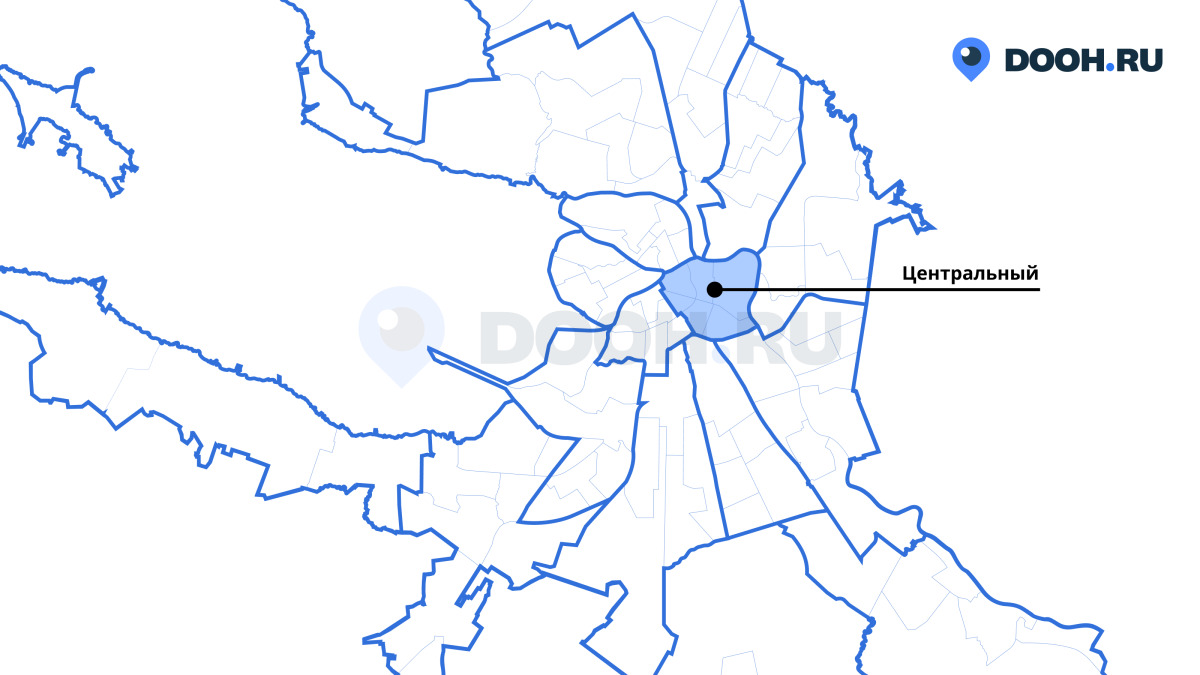
District Features:
Highest concentration of landmarks, museums, galleries, consulates, and representative offices of various countries
Strict restrictions on outdoor advertising placement due to the historical status of most buildings
Developed transport infrastructure: 11 metro stations on all 5 metro lines
High cost of advertising surfaces with their limited quantity
Audience Characteristics:
Tourists (Russian and foreign) - a significant part of daytime traffic, especially during the high season
Office workers with above-average income - a significant part of the daytime audience on weekdays
Residents of elite real estate - a constant audience with high purchasing power
Visitors to restaurants, theaters, and museums - a culturally oriented audience with above-average income
Shoppers of the premium segment - target audience for luxury brands
Key Locations for Advertising Placement:
Nevsky Prospekt - the main artery of the city with maximum pedestrian and automobile traffic. Choosing this location is driven not only by high foot traffic but also by the prestigious placement that enhances the status of the advertised brand.
Ploshchad Vosstaniya (Uprising Square) - the largest transport hub. The "Ploshchad Vosstaniya" metro station has one of the highest passenger flows in the center, making it extremely attractive for advertisers. This location is especially effective for mass-market goods and services due to the diversity of the audience.
Liteyny Prospekt - a prestigious business street with high automobile traffic and a concentration of office workers with above-average income, making it ideal for advertising premium goods and services.
Vladimirsky Prospekt - a popular shopping zone with high pedestrian traffic and a concentration of youth audience due to proximity to educational institutions.
Sadovaya Street - a busy thoroughfare with diverse commercial infrastructure, connecting several city districts, ensuring broad reach of various target groups.
Recommended Formats:
Media facades at key intersections (especially Nevsky Prospekt, Ploshchad Vosstaniya) - high visibility and prestige, especially effective for image advertising of premium brands.
Citylight formats along main pedestrian routes (Nevsky Prospekt, Sadovaya Street) - optimal cost-effectiveness ratio for targeted impact on pedestrians. This format is especially effective for local services and events.
Branding of public transport stops - prolonged contact with the audience in waiting areas.
Roof installations (considering restrictions) - high status and visibility from afar, suitable for corporate branding. The limited number of such structures increases their exclusivity.
Digital screens in shop windows - a modern format with the possibility of time-of-day targeting.
The Central District has the strictest restrictions on outdoor advertising placement, so all advertising structures require careful coordination with the Committee for Urban Planning and Architecture (KGA) and the Committee for State Control, Use, and Protection of Historical and Cultural Monuments (KGIOp).
Admiralteysky District
The Admiralteysky District is a continuation of the center with business, creative, and tourist audiences. Here, consulates, historic buildings, and new creative spaces like Novaya Gollandiya (New Holland) coexist.
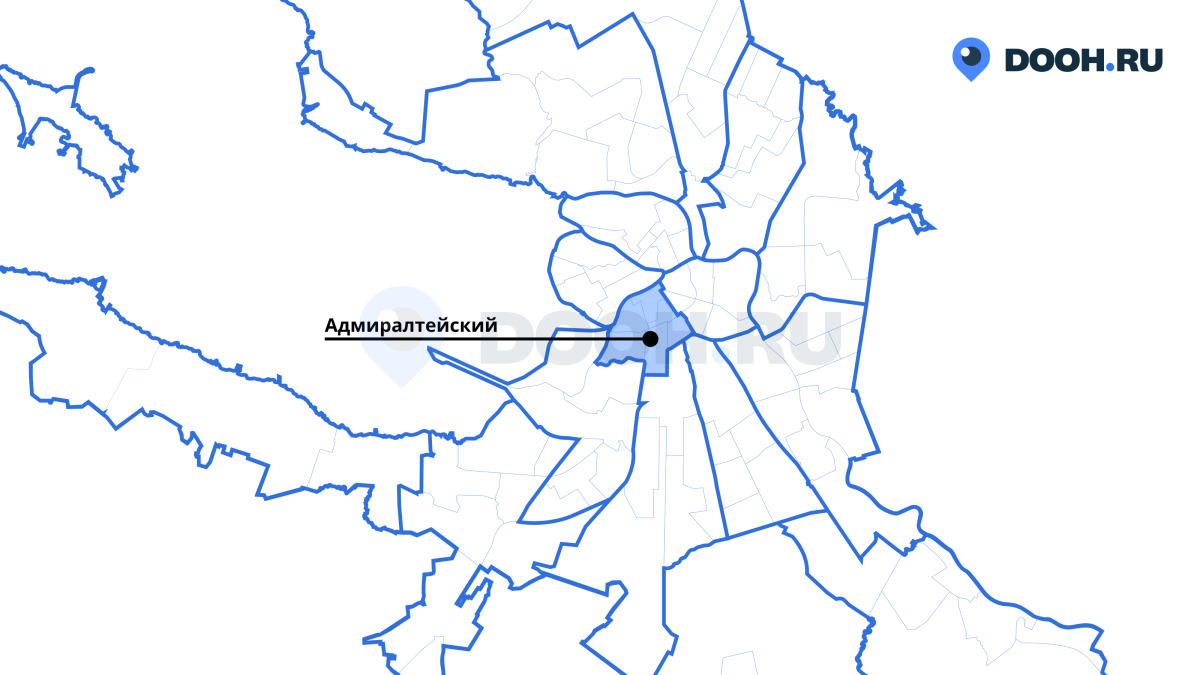
District Features:
Rich historical heritage with many architectural monuments
Combination of tourist zones and business quarters
Proximity to the city's main landmarks
Developed transport infrastructure with several metro stations
Presence of major transport hubs (e.g., Baltiysky Railway Station)
Active development of creative spaces (Novaya Gollandiya, etc.)
Strict restrictions on outdoor advertising placement in the historical part
Audience Characteristics:
Mid- and senior-level office workers - the main daytime audience on weekdays
Tourists - a significant part of traffic during the high season, especially in the historical part of the district
Students (several large universities, especially near "Tekhnologichesky Institut" metro station) - a youth audience with a limited budget but high receptiveness to new trends
Residents with above-average income - a constant audience with good purchasing power
Visitors to cultural institutions (Mariinsky Theatre, etc.) - an educated audience with selective consumption
Key Locations for Advertising Placement:
Sennaya Ploshchad (Hay Square) - a major shopping and transport hub with three metro stations ("Sennaya Ploshchad", "Spasskaya", "Sadovaya"). The "Sennaya Ploshchad" station is the busiest in the district. The huge concentration of pedestrian flows and the presence of large shopping centers make it ideal for mass-market goods and services.
"Baltiyskaya" metro station - an important transport hub serving the Baltiysky Railway Station. Effective for reaching commuter train passengers and residents of southern districts.
"Tekhnologichesky Institut" metro station (both platforms) - a major interchange hub attracting students and office workers, making this location extremely attractive for advertising educational services and youth goods.
Voznesensky Prospekt - a prestigious street with high automobile traffic and a concentration of business centers. This location is effective for the B2B segment and premium consumer goods.
Fontanka River Embankment - a popular tourist route with high pedestrian traffic during the warm season.
Sadovaya Street (part in the Admiralteysky District) - a lively zone with a diverse audience.
Recommended Formats:
Citylight formats on main pedestrian routes (Sennaya Ploshchad, Sadovaya Street) - an optimal solution in conditions of historical development.
Stop branding (especially near metro stations "Sennaya Ploshchad", "Baltiyskaya", "Tekhnologichesky Institut") - an effective format with high foot traffic for prolonged audience contact.
Advertising structures in shopping zones (TC "PIK", "Sennaya") - targeted impact on potential buyers for maximum conversion in close proximity to points of sale.
Digital screens in shop windows - a modern solution with the possibility of dynamic content changes.
Poster stands (especially near theaters and concert venues) - targeted impact on a culturally oriented audience for promoting cultural events and related services.
Petrogradsky District
Petrogradsky is one of the most prestigious districts in the city. Here, historic buildings, elite new constructions, parks, and the Gazprom Arena stadium meet. The district is attractive for both business and living.
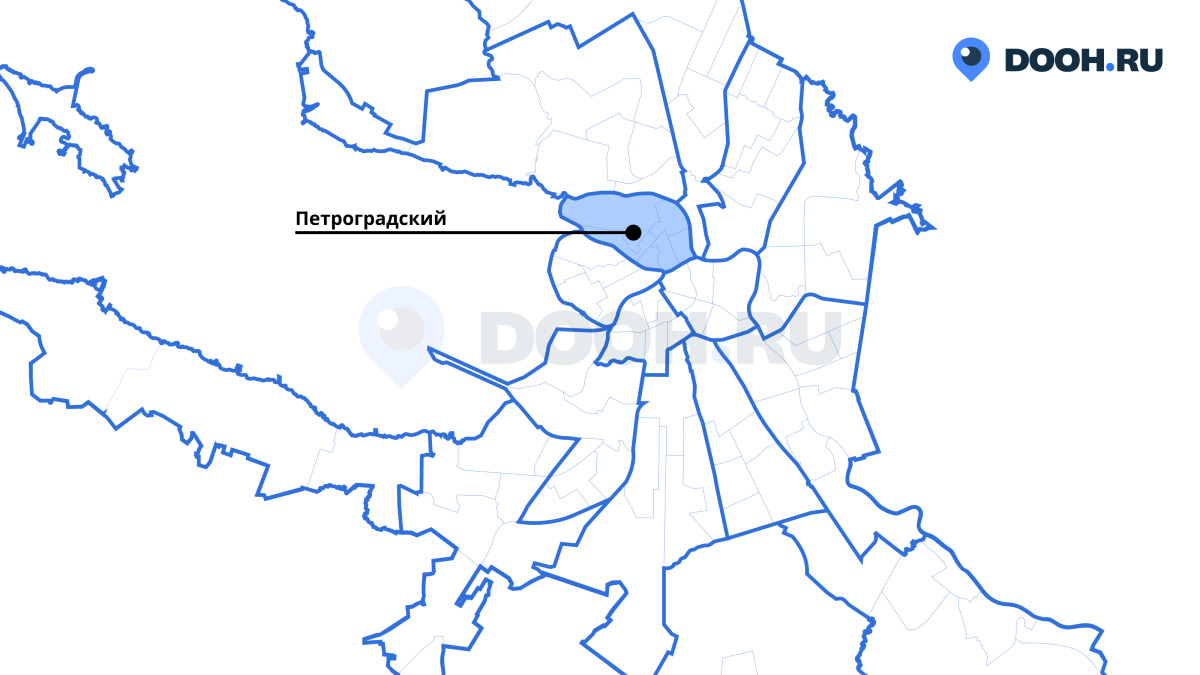
District Features:
One of the most prestigious and expensive districts in the city
The district covers seven islands
Combination of historical development and elite modern residential complexes
High concentration of parks and green areas (Primorsky Park Pobedy, Central Park of Culture and Leisure named after Kirov)
Presence of major sports facilities (Gazprom Arena stadium)
Developed entertainment and leisure infrastructure
Restrictions on outdoor advertising placement in the historical part
Audience Characteristics:
Residents of elite real estate with high income - a constant audience with maximum purchasing power
Representatives of creative professions - a significant part of the district's population, receptive to unconventional advertising solutions
Senior-level office workers - daytime audience on weekdays with high income
Visitors to premium-class restaurants - a solvent audience oriented towards quality and status
Tourists (especially in the area of the Peter and Paul Fortress and near "Gorkovskaya" metro station) - additional audience during the high season
Key Locations for Advertising Placement:
Kamenoostrovsky Prospekt - the main thoroughfare of the district with high status and a concentration of premium residential complexes and business centers.
Bolshoy Prospekt P.S. - a lively shopping street with diverse infrastructure. High concentration of retail outlets and restaurants attracting a solvent audience.
Chkalovsky Prospekt and "Chkalovskaya" metro station - an important transport corridor and hub with high traffic.
Petrogradskaya Embankment - a prestigious location with views of the Neva and high automobile traffic for image advertising of premium brands due to its status and scenic views.
"Petrogradskaya" metro station - the busiest station in the district. A key transport hub attracting district residents and workers.
"Gorkovskaya" metro station - the second busiest station, located near the Peter and Paul Fortress, ensuring high tourist flow and making it attractive for advertising tourist services and souvenirs.
"Krestovsky Ostrov" and "Zenit" metro stations - important for reaching park visitors and sports event attendees.
Recommended Formats:
Premium citylight formats (especially on Kamenoostrovsky and Bolshoy Prospekts) - high-quality structures matching the district's status.
Stop branding (near "Petrogradskaya", "Gorkovskaya" metro stations) - stylish structures with the possibility of detailed study of the advertising message.
Small-format image structures - exclusive solutions integrated into the urban environment.
Digital screens in shop windows - a modern format with the possibility of time-of-day targeting.
Elegant lightboxes matching the district's architectural appearance - harmonious combination with historical development for creating unobtrusive yet effective advertising in prestigious locations.
Vasileostrovsky District
The island nature of the district sets a special rhythm. Here, historical development, elite residential complexes, and university campuses combine. Reclaimed territories are actively developing.
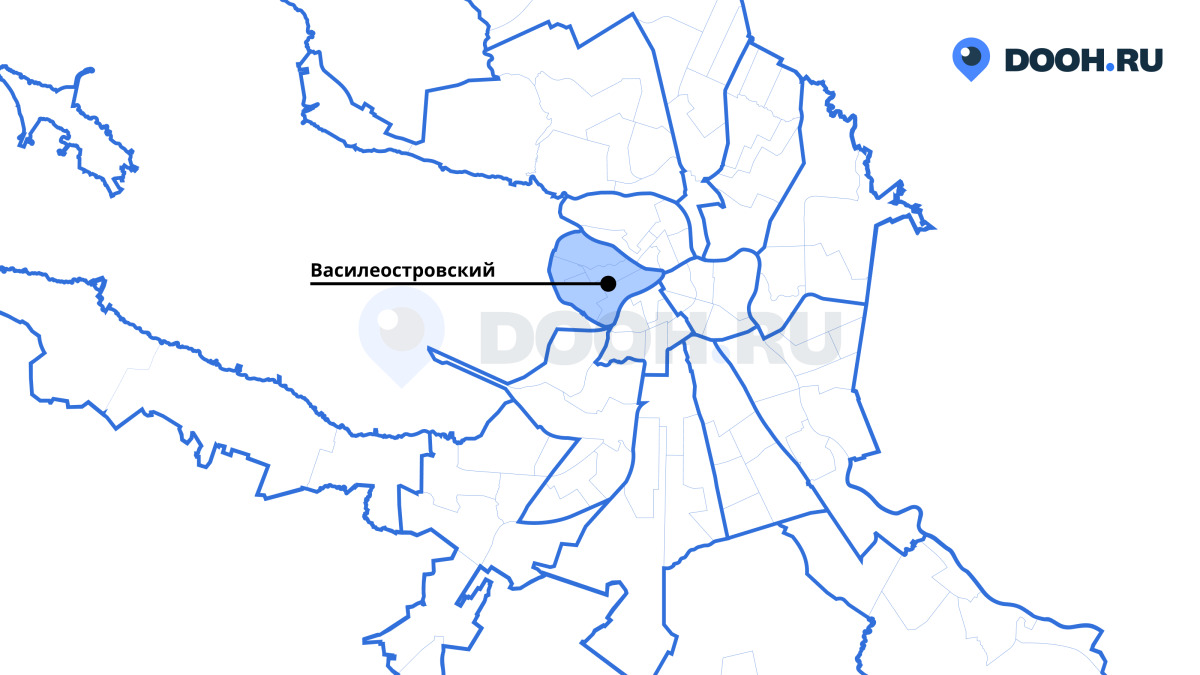
District Features:
Clear division into a historical part (eastern and central parts of the island) and more modern territories (western part and reclaimed territories)
High concentration of educational institutions, including SPbGU and other prestigious universities
Large number of business centers
Active development of reclaimed territories with new business- and comfort-class residential buildings
Audience Characteristics:
Students and teachers (especially in the eastern part near "Vasileostrovskaya" metro station) - a significant part of the district's daytime population, receptive to innovative ideas
IT specialists and office workers - a growing audience with above-average income and high technological literacy
Residents with above-average income (especially in new residential complexes in the west and on reclaimed land) - a solvent audience oriented towards quality
Tourists (in the historical part and on embankments) - additional audience during the high season
Young families (in the western part and on reclaimed territories, near "Primorskaya" metro station) - active consumers of home goods, children's items, and family leisure products
Key Locations for Advertising Placement:
Bolshoy Prospekt V.O. - the main thoroughfare of the district with diverse commercial infrastructure and high automobile and pedestrian traffic.
Sredny Prospekt V.O. - a lively street with high pedestrian traffic and a concentration of retail outlets.
Embankments (Universitetskaya, Makarova, Novosmolenskaya) - prestigious locations with high status and scenic views.
Sea Facade (reclaimed territories) - an actively developing zone with new residential complexes and infrastructure.
Area around "Sevkabel Port" - a popular leisure spot with a high concentration of youth and the creative class.
"Vasileostrovskaya" metro station - the busiest station in the district, located in the historical part, attracting students, office workers, and residents.
"Primorskaya" metro station - serves densely populated residential quarters in the western part of the island, ensuring coverage of a large number of residents.
Recommended Formats:
Citylight formats along main prospects (Bolshoy, Sredny) - an optimal solution for reaching pedestrian flows.
Digital screens near business centers and educational institutions - a modern format for targeting office workers and students.
Branding of public transport stops (especially near "Vasileostrovskaya", "Primorskaya" metro stations) - an effective format for prolonged contact with the audience.
Advertising structures in leisure zones (especially in the western part and on reclaimed land) - unconventional formats for reaching the audience during leisure time.
Innovative formats in the "Sevkabel Port" area - creative solutions for a progressive audience.
In the historical part of the district, strict restrictions on outdoor advertising placement apply, requiring coordination with the KGA, which must be considered when planning a campaign.
Residential Districts: Mass Audience and Affordable Prices
Vyborgsky District
Vyborgsky is a district with diverse development: from "Khrushchyovka" and "Stalinka" buildings to modern residential complexes. Well-balanced in terms of audience and saturated with points of attraction - parks, universities, shopping centers.

District Features:
Large territory with diverse development (from historical to modern)
High population (over 500 thousand people)
Combination of residential, industrial, and recreational zones
Presence of large parks and green areas (Sosnovka, Udelnaya Park)
Developed transport infrastructure (several metro stations, railway stations)
Presence of large shopping and entertainment centers
Presence of scientific and educational institutions
Audience Characteristics:
Families with children - the main part of the population in residential quarters, active consumers of everyday goods
Industrial enterprise workers and office employees - a stable audience with average income
Students (several universities and colleges) - a youth audience receptive to promotions and special offers
Residents with different income levels - from average to above average in new residential complexes
Key Locations for Advertising Placement:
Prospekt Engel'sa - the main thoroughfare of the district with intensive automobile and pedestrian traffic.
Svetlanovskaya Ploshchad - an important transport hub connecting several large prospects.
"Prospekt Prosveshcheniya" metro station - the busiest station in the district. A major transport interchange hub, a center of attraction for residents of the northern part of the district. The enormous passenger flow makes this station one of the most effective locations for mass advertising in the city.
"Ozerki" metro station - the second busiest station in terms of passenger flow, located near the shopping and entertainment center of the same name, ensuring synergy with commercial activity.
"Vyborgskaya", "Udelnaya", "Lesnaya", and "Parnas" metro stations also have significant passenger flow and are important for reaching various parts of the district.
Areas near large shopping and entertainment centers ("Grand Canyon", "Nord") - high concentration of target audience during shopping moments.
Recommended Formats:
3x6 billboards along main thoroughfares (Prospekt Engel'sa, Vyborgskoye Shosse) - a classic format for broad coverage of motorists and public transport passengers.
Citylight formats near metro stations ("Prospekt Prosveshcheniya", "Ozerki") and shopping and entertainment centers - targeted impact on pedestrian flows in high-traffic areas.
Super-sites at district entrances/exits - large-format advertising for maximum visibility to cover large transport flows.
Branding of public transport stops - prolonged contact with the audience in waiting areas.
Advertising on/in public transport - coverage of residents during daily commutes.
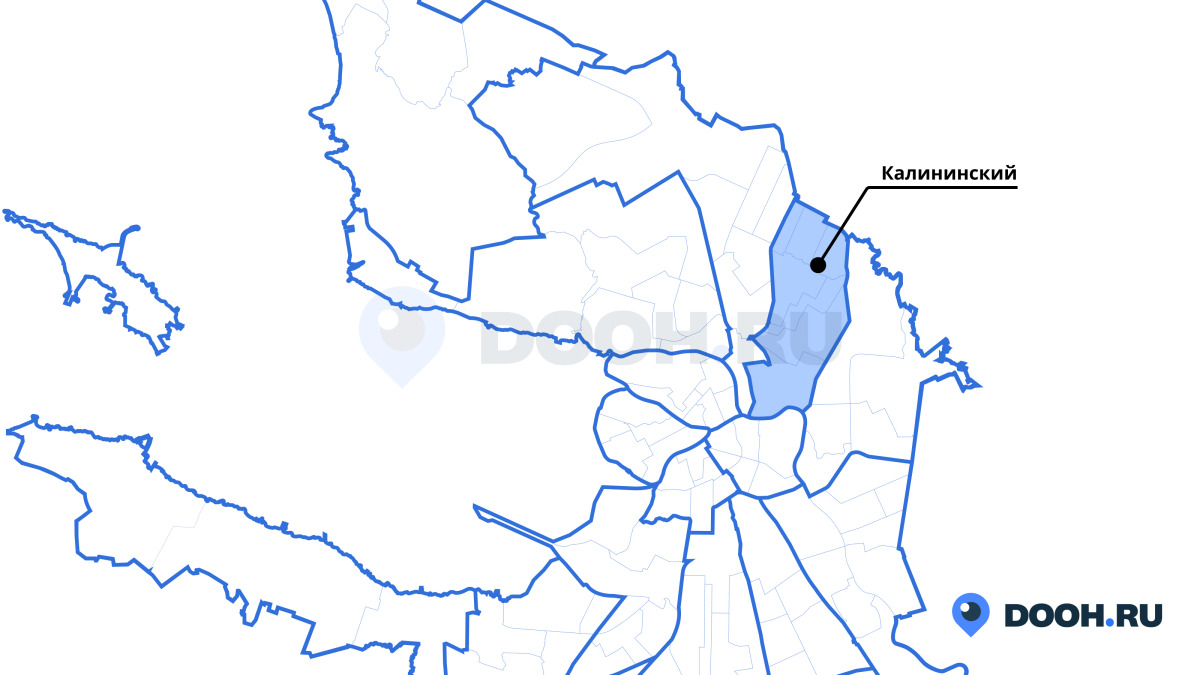
Kalininsky District
Kalininsky District is a densely populated district in the north of the city with developed infrastructure. Here, housing density is high, with many educational institutions, shops, and medical facilities. Advertising works steadily and on a mass scale.
District Features:
High population density
Predominantly residential development from different periods (from Stalin-era buildings to modern residential complexes)
Developed social and commercial infrastructure
Good transport accessibility (several metro stations, major thoroughfares)
Presence of industrial zones and research institutes
Fewer restrictions on outdoor advertising placement
Audience Characteristics:
Families with average income - the main part of the population
Research staff and public sector workers - a significant part of the audience in the area of research institutes and universities
Students (Polytechnic University, etc.) - an active youth audience
Pensioners - a substantial share of the population in old residential quarters
Key Locations for Advertising Placement:
Prospekt Prosveshcheniya (part in Kalininsky District) - a lively thoroughfare with high traffic.
Grazhdansky Prospekt - one of the main arteries of the district with intensive traffic.
Svetlanovsky Prospekt - an important transport thoroughfare connecting northern districts.
"Grazhdansky Prospekt" metro station - the busiest station in the district, a center of attraction for residents of the northern part of the district.
"Akademicheskaya" metro station - located in an area with a high concentration of research institutes and residential quarters.
"Ploshchad Lenina" metro station - an important transport hub near Finlyandsky Railway Station, providing connection with suburbs and other districts.
"Ploshchad Muzhestva" and "Politekhnicheskaya" metro stations - serve large residential areas and educational institutions.
Recommended Formats:
3x6 billboards along main prospects (Grazhdansky, Prosveshcheniya, Svetlanovsky) - an effective tool for reaching a mass audience.
Citylight formats near metro stations ("Grazhdansky Prospekt", "Akademicheskaya", "Ploshchad Lenina") and shopping centers - targeted impact on pedestrians.
Advertising on/in public transport - coverage of residents during daily commutes for prolonged contact with the audience.
Stop branding - an economical way to ensure prolonged contact with the audience.
Advertising boards at major intersections - high visibility for motorists.
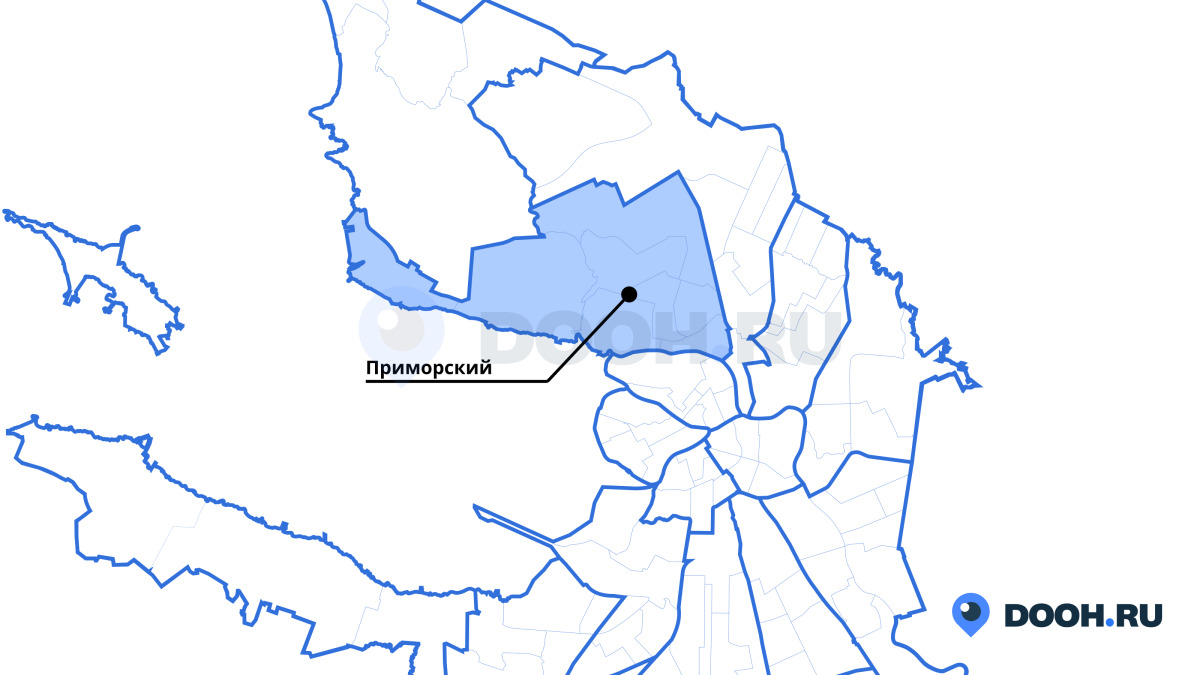
Primorsky District
Primorsky District is the leader in population and one of the fastest-developing districts of Saint Petersburg. Here, residential quarters are being built rapidly, shopping and entertainment centers are opening, and new roads are being laid.
District Features:
The largest district by population in the city (over 700 thousand people)
Active housing construction and infrastructure development
Combination of old Soviet-era development and modern residential complexes
Proximity to the Gulf of Finland and presence of recreational zones
Good transport accessibility (Ring Road, Western High-Speed Diameter, several metro stations)
Presence of large shopping and entertainment centers
Fewer restrictions on outdoor advertising placement compared to central districts
Audience Characteristics:
Young families with children - the predominant audience in new residential complexes
Specialists and mid-level managers - a significant part of the economically active population
Residents with above-average income - especially in prestigious residential complexes along the Gulf of Finland
Key Locations for Advertising Placement:
Komendantsky Prospekt - one of the main thoroughfares of the district with intensive traffic and a large number of new residential complexes.
Prospekt Ispytateley - a lively street with shopping centers and residential areas.
Savushkina Street - a prestigious thoroughfare along the 300th Anniversary of Saint Petersburg Park.
Bogatyrsky Prospekt - a major transport artery connecting different parts of the district.
"Pionerskaya" metro station - a major transport hub and center of attraction for residents.
"Komendantsky Prospekt" metro station - serves densely populated quarters.
"Chyornaya Rechka" and "Staraya Derevnya" metro stations - important transport hubs in the southern part of the district.
"Begovaya" metro station - serves new residential quarters near Lakhta Center.
Recommended Formats:
3x6 billboards and super-sites along main thoroughfares (Komendantsky Prospekt, Bogatyrsky Prospekt, Primorskoye Shosse) - maximum coverage of automobile traffic.
Citylight formats near metro stations ("Pionerskaya", "Komendantsky Prospekt") and large shopping and entertainment centers ("City Mall", "Atmosfera") - effective impact on pedestrians in concentration areas.
Digital screens near shopping and entertainment centers and at busy intersections - a modern format with the possibility of dynamic content.
Stop branding - an economical way to reach residents.
Advertising in new residential complexes (elevators, lobbies) - targeted impact on residents of specific buildings.
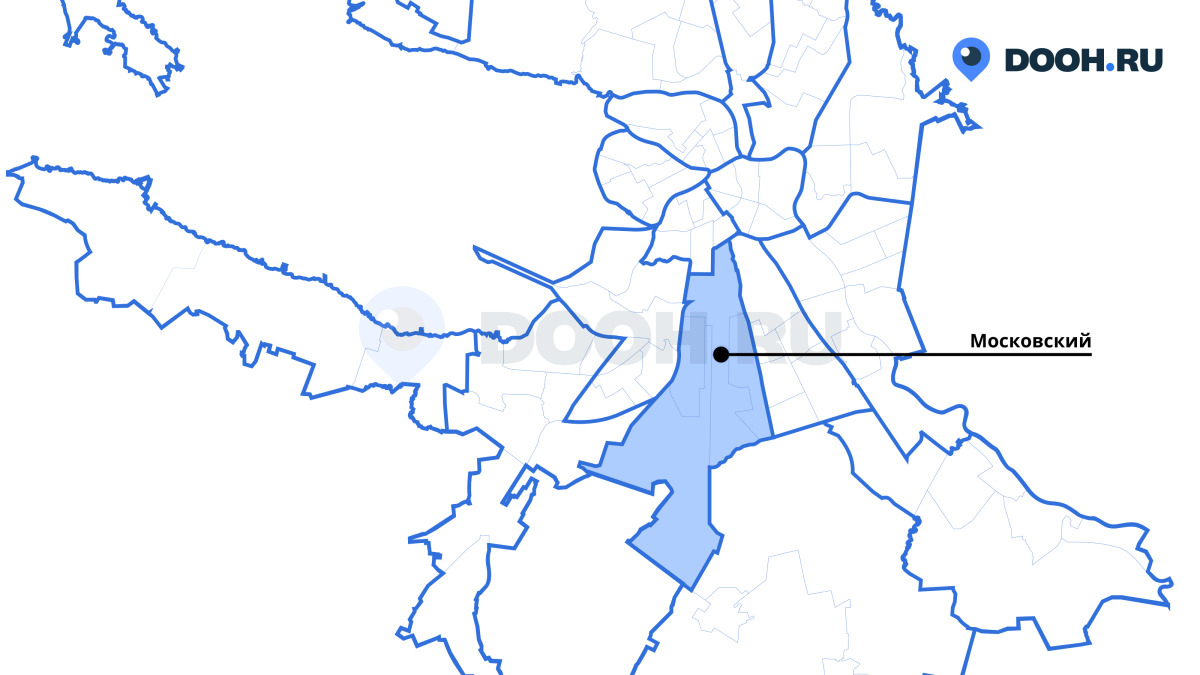
Moskovsky District
Moskovsky District is a prestigious district in the south of Saint Petersburg, known for its Stalinist architecture, developed infrastructure, and proximity to the airport.
District Features:
Prestigious status and developed infrastructure
Architectural ensemble of Moskovsky Prospekt (Stalinist Empire style)
Proximity to Pulkovo Airport
Excellent transport accessibility (several metro stations, Ring Road, Western High-Speed Diameter)
Presence of large business and shopping centers
Combination of residential, business, and recreational zones
Audience Characteristics:
Residents with above-average income - especially in buildings along Moskovsky Prospekt
Businesspeople and business travelers - due to proximity to the airport and congress and exhibition centers
Families with stable income - in the district's residential quarters
Park and shopping and entertainment center visitors - weekend audience
Key Locations for Advertising Placement:
Moskovsky Prospekt - the main thoroughfare of the district and one of the main ones in the city, with high automobile traffic and prestigious development.
Pulkovskoye Shosse - the road to Pulkovo Airport, high traffic, including transit and business traffic.
"Kupchino" metro station - one of the busiest stations in the city, the largest transport interchange hub in the south.
"Moskovskaya" metro station - the second busiest in the district in terms of passenger flow, located on a square with fountains, an important transport hub.
"Zvyozdnaya" and "Park Pobedy" metro stations - serve large residential areas and park zones.
"Elektrosila" and "Moskovskie Vorota" metro stations - located in the northern part of the district with business and residential development.
Recommended Formats:
3x6 billboards and super-sites along Moskovsky Prospekt and Pulkovskoye Shosse - coverage of large automobile flow, including transit.
Citylight formats near metro stations ("Kupchino", "Moskovskaya", "Park Pobedy", "Zvyozdnaya") - targeted impact on pedestrians in areas with high passenger flow.
Advertising structures near Pulkovo Airport - targeting air passengers.
Digital screens on Moskovsky Prospekt and near shopping and entertainment centers - a modern format for dynamic advertising.
Stop branding - an economical format for prolonged contact.
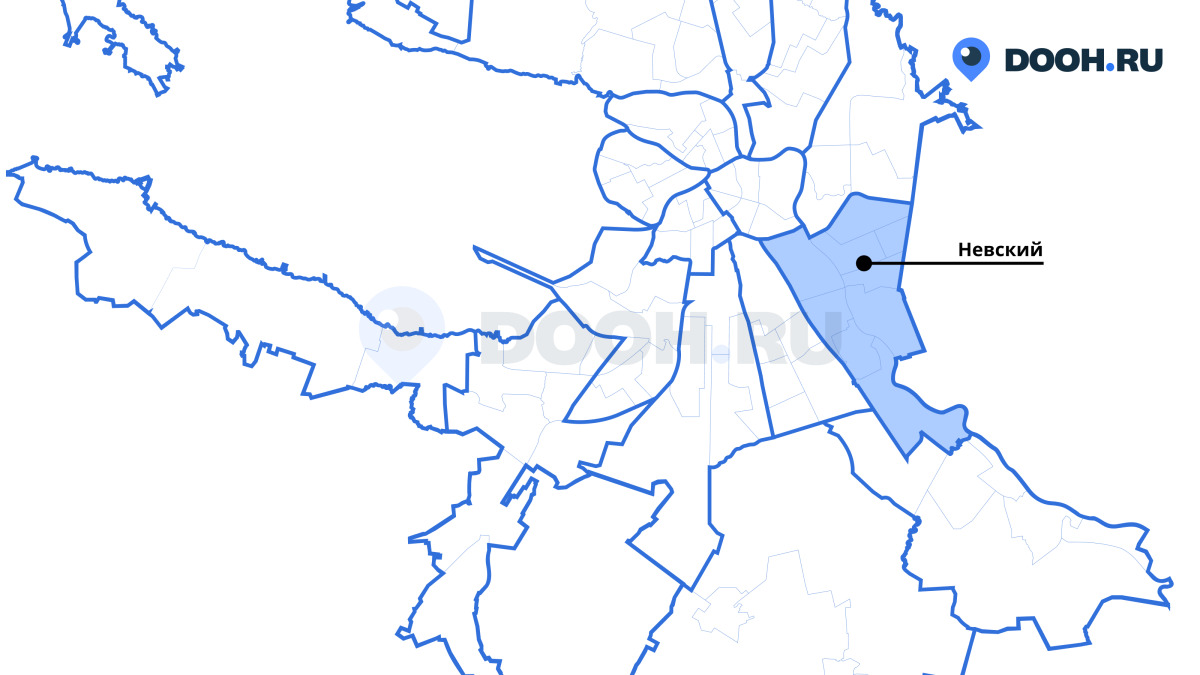
Nevsky District
Nevsky District is an extensive territory with heterogeneous development, large industrial enterprises, and a dense transport network. Here, advertising works "head-on" - for coverage and everyday needs.
District Features:
Huge population (over 550 thousand people)
Diverse development (from Khrushchyovka buildings to modern residential complexes)
Presence of large industrial enterprises
Good transport accessibility (several metro stations, Ring Road)
Presence of large shopping centers
Fewer restrictions on outdoor advertising placement
Audience Characteristics:
Industrial enterprise workers - a significant part of the population on the left bank
Families with average income - the main audience in residential quarters on the right bank
Youth and students - in areas with new construction
Residents with different income levels
Key Locations for Advertising Placement:
Prospekt Obukhovskoy Oborony - the main thoroughfare of the left bank with industrial enterprises and residential quarters.
Prospekt Bolshevikov and Ulitsa Dybenko - main thoroughfares of the right bank with intensive traffic.
"Ulitsa Dybenko" metro station - a major transport hub on the right bank.
"Prospekt Bolshevikov" metro station - located near the Ice Palace.
"Lomonosovskaya" and "Rybatskoye" metro stations - important hubs for left bank residents.
"Yelizarovskaya", "Proletarskaya", "Obukhovo" metro stations - serve industrial zones and residential areas on the left bank.
Recommended Formats:
3x6 billboards along main prospects (Obukhovskoy Oborony, Bolshevikov, Dalnevostochny) - broad coverage of automobile and public transport.
Citylight formats near metro stations ("Ulitsa Dybenko", "Prospekt Bolshevikov", "Lomonosovskaya", "Rybatskoye") and shopping and entertainment centers ("Mega Dybenko", "London Mall") - targeted impact on pedestrians.
Advertising on/in public transport - an effective way to reach residents of both parts of the district.
Stop branding - an economical format for prolonged contact.
Advertising boards near the Ring Road - coverage of transit traffic.
Frunzensky District
Frunzensky is one of the most populated districts in the south of Saint Petersburg with active development, developed trade, and good transport accessibility. Everything here is geared towards everyday life, meaning outdoor advertising works steadily and for a broad audience.
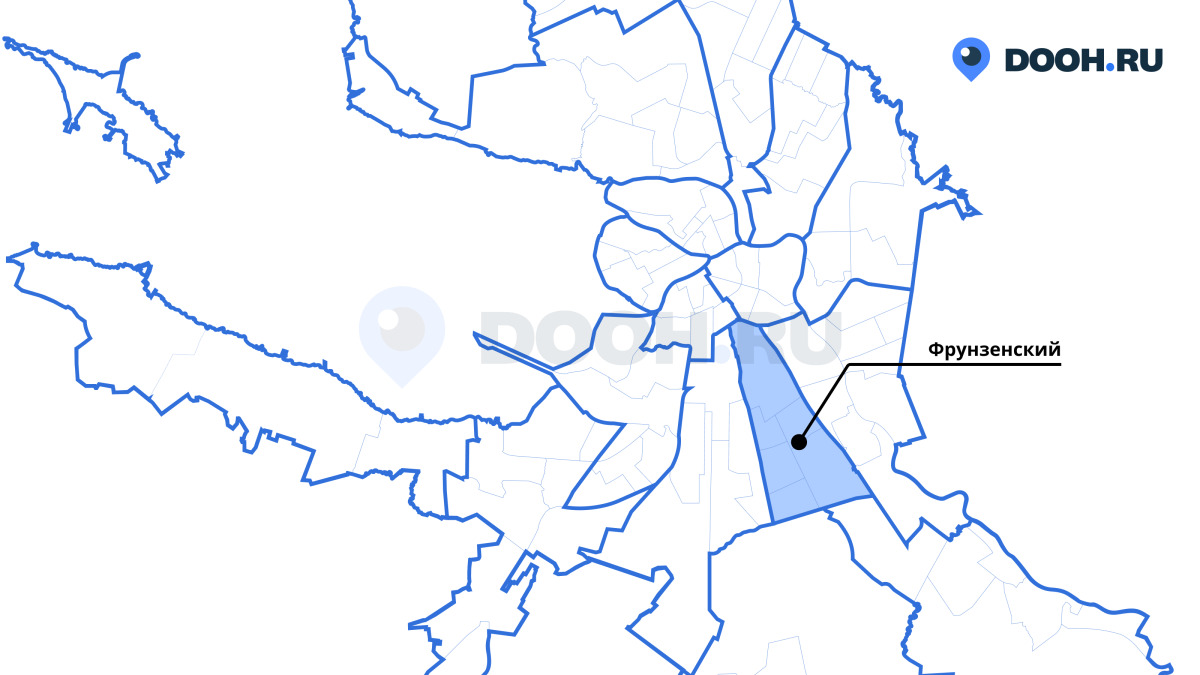
District Features:
High population (over 400 thousand people)
Predominantly residential development from different periods
Active construction of new residential complexes
Good transport accessibility (several metro stations, proximity to Ring Road and Western High-Speed Diameter)
Developed commercial infrastructure
Fewer restrictions on outdoor advertising placement
Audience Characteristics:
Families with average and below-average income - the main part of the population
Youth - a significant share of residents
Service and trade sector workers
Key Locations for Advertising Placement:
Bukharestskaya Street - one of the main thoroughfares of the district with shopping centers and residential areas.
Prospekt Slavy - an important transport artery with intensive traffic.
"Kupchino" metro station - one of the busiest stations in the city, the largest transport interchange hub in the south.
"Mezhdunarodnaya" metro station - a center of attraction for residents of the northern part of Kupchino.
"Prospekt Slavy" and "Dunayskaya" metro stations - serve the southern part of the district.
"Obvodny Kanal", "Bukharestskaya", "Volkovskaya" metro stations - located in the northern part of the district.
Recommended Formats:
3x6 billboards along Bukharestskaya Street and Prospekt Slavy - coverage of the main automobile traffic in the district.
Citylight formats near metro stations ("Kupchino", "Mezhdunarodnaya", "Prospekt Slavy", "Dunayskaya") and shopping and entertainment centers ("RIO", "Mezhdunarodny") - targeted impact on pedestrians.
Advertising on/in public transport - an effective way to reach residents.
Stop branding - an economical format for prolonged contact.
Kirovsky District
Kirovsky District is a combination of industrial enterprises, residential quarters, and new developments. Here, the working-class audience is strong, and advertising with a practical message resonates with residents of all ages. Infrastructure is developing, while placement costs remain affordable.
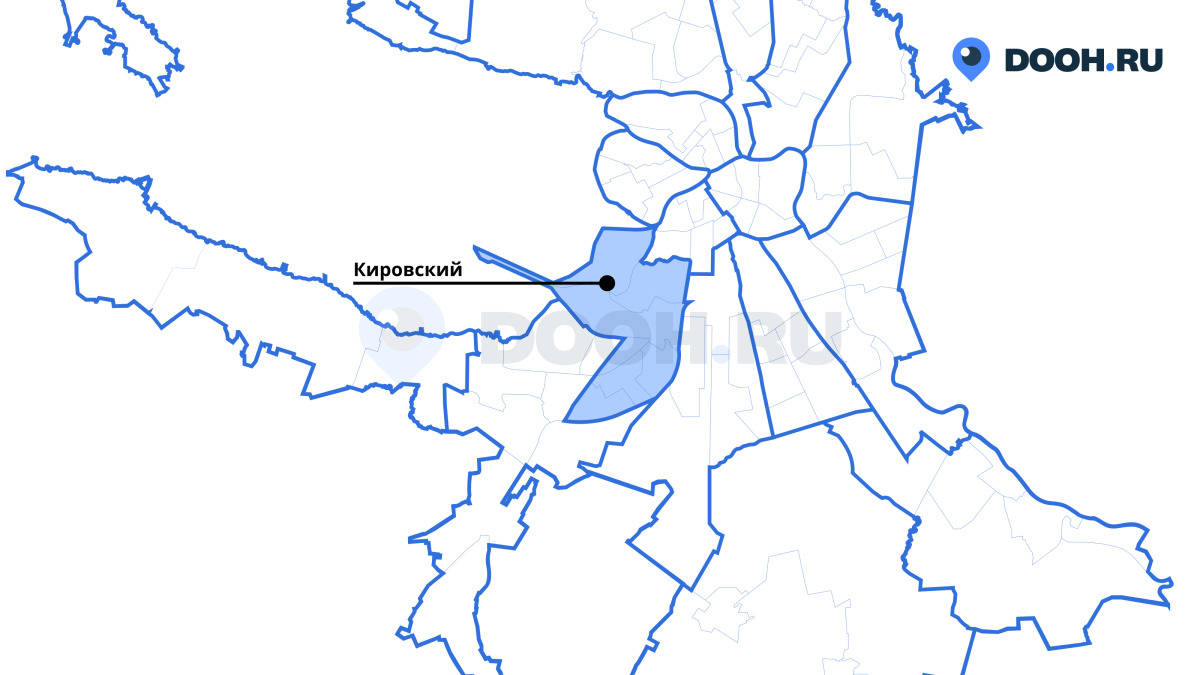
District Features:
Combination of industrial zones and residential quarters
Presence of large industrial enterprises
Proximity to the Gulf of Finland
Good transport accessibility (several metro stations, Western High-Speed Diameter)
Active housing construction in recent years
Fewer restrictions on outdoor advertising placement
Audience Characteristics:
Industrial enterprise workers (Kirov Plant, etc.)
Families with average and below-average income
Pensioners - a significant share of the population in old quarters
Residents of new buildings in the southwest
Key Locations for Advertising Placement:
Prospekt Stachek - the main thoroughfare of the district with industrial enterprises, historical development, and residential quarters.
Leninsky Prospekt (part in Kirovsky District) - an important transport artery.
Prospekt Veteranov - a major thoroughfare serving densely populated quarters.
"Prospekt Veteranov" metro station - one of the busiest stations in the city, the largest transport hub in the southwest.
"Avtovo" and "Narvskaya" metro stations - important hubs with high passenger flow, serving the historical and industrial parts of the district.
"Leninsky Prospekt" metro station - serves a large residential area and commercial zones.
"Kirovsky Zavod" metro station - serves the industrial zone.
Recommended Formats:
3x6 billboards along Prospekt Stachek, Leninsky Prospekt, and Prospekt Veteranov - coverage of automobile and public transport.
Citylight formats near metro stations ("Prospekt Veteranov", "Avtovo", "Narvskaya", "Leninsky Prospekt") - targeted impact on pedestrians.
Advertising on/in public transport - an effective way to reach residents.
Stop branding - an economical format for prolonged contact.
Advertising boards at district entrances/exits.
Krasnogvardeysky District
Krasnogvardeysky is a district with an industrial past and active residential development in recent years. The district is transforming: new residential complexes are appearing, transport and commercial infrastructure are developing.

District Features:
Combination of industrial zones and residential quarters
Active housing construction in recent years
Presence of large green areas (Rzhevsky Forest Park, Malinovka Park)
Developing transport infrastructure (several metro stations, Ring Road)
Presence of large shopping centers
Fewer restrictions on outdoor advertising placement
Audience Characteristics:
Passengers of Ladozhsky Railway Station (residents of Leningrad Oblast, other regions)
Families with average income - in residential quarters (Rzhevka-Porokhovye)
Industrial enterprise workers
Residents of new buildings
Key Locations for Advertising Placement:
"Ladozhskaya" metro station - the largest transport hub, including Ladozhsky Railway Station. An absolute priority for advertising placement aimed at maximum coverage.
"Novocherkasskaya" metro station - an important hub in the southern part of the district.
Zanevsky Prospekt - the main thoroughfare leading to Ladozhsky Railway Station.
Prospekt Kosygina - a major thoroughfare in the residential part of the district (Rzhevka-Porokhovye).
Industrialny Prospekt - an important transport artery.
Piskaryovsky Prospekt - connects the district with Kalininsky District.
Recommended Formats:
Advertising structures of all formats near Ladozhsky Railway Station and "Ladozhskaya" metro station - maximum effectiveness due to enormous passenger flow.
3x6 billboards along Zanevsky, Kosygina, Industrialny Prospekts - coverage of automobile traffic.
Citylight formats near metro stations ("Ladozhskaya", "Novocherkasskaya") and shopping and entertainment centers ("Zanevsky Cascade", "Iyun") - targeted impact on pedestrians.
Advertising on/in public transport.
Stop branding.
Krasnoselsky District
Krasnoselsky District is an extensive territory in the southwest of Saint Petersburg, where urban density and dacha freedom are mixed. The district is actively being developed, with many young families and growing demand for everything related to everyday life and comfort.
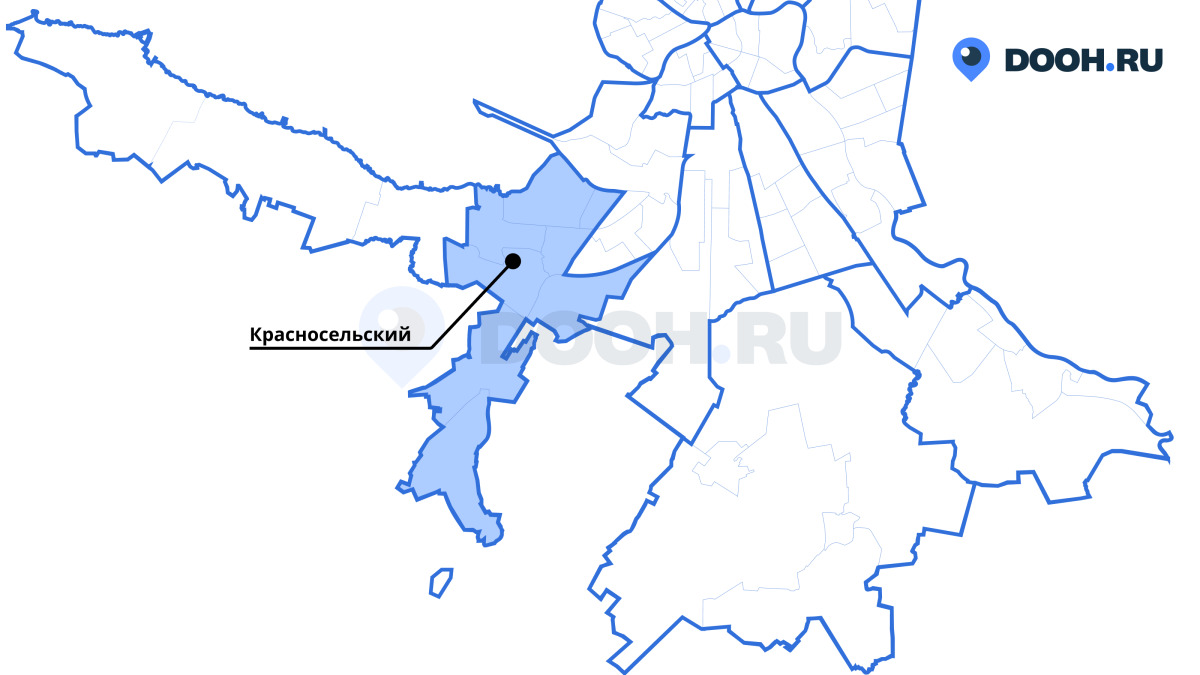
District Features:
Large territory with diverse development
Active housing construction
Proximity to the Gulf of Finland and presence of recreational zones
Developing transport infrastructure (metro construction, Western High-Speed Diameter)
Combination of urban development and suburban territories
Fewer restrictions on outdoor advertising placement
Audience Characteristics:
Young families with children - the predominant audience in new buildings (Baltiyskaya Zhemchuzhina, etc.)
Residents with average income
Car owners - high level of car ownership due to distance from the metro
Key Locations for Advertising Placement:
Petergofskoye Shosse - the main thoroughfare connecting the district with the center and suburbs (Petergof, Strelna).
Prospekt Veteranov (part in Krasnoselsky District) - a major thoroughfare in the densely populated part.
Prospekt Marshala Zhukova - an important transport artery.
Ulitsy Partizana Germana, Doblesti - centers of attraction in residential quarters.
Large shopping and entertainment centers ("Zhemchuzhnaya Plaza", "Fiolent") - places where residents concentrate.
Main stops of ground public transport connecting the district with "Prospekt Veteranov", "Leninsky Prospekt", "Avtovo" metro stations.
Recommended Formats:
3x6 billboards and super-sites along Petergofskoye Shosse, Prospekt Veteranov, and Prospekt Marshala Zhukova - the main method of reaching residents due to the absence of a metro.
Citylight formats near shopping and entertainment centers and at busy intersections - impact on pedestrians in concentration areas.
Branding of public transport stops - especially important due to the absence of a metro, prolonged contact with those waiting.
Advertising on/in public transport (buses, trolleybuses, trams) - a key communication channel with residents.
Advertising in new residential complexes.
Suburban Districts: Specifics and Local Coverage
Pushkinsky District
Pushkin and Pavlovsk are gems of the city's south. Historical architecture, parks, tourists, and a comfortable urban environment create a special atmosphere here. Advertising should be unobtrusive and organically integrated.
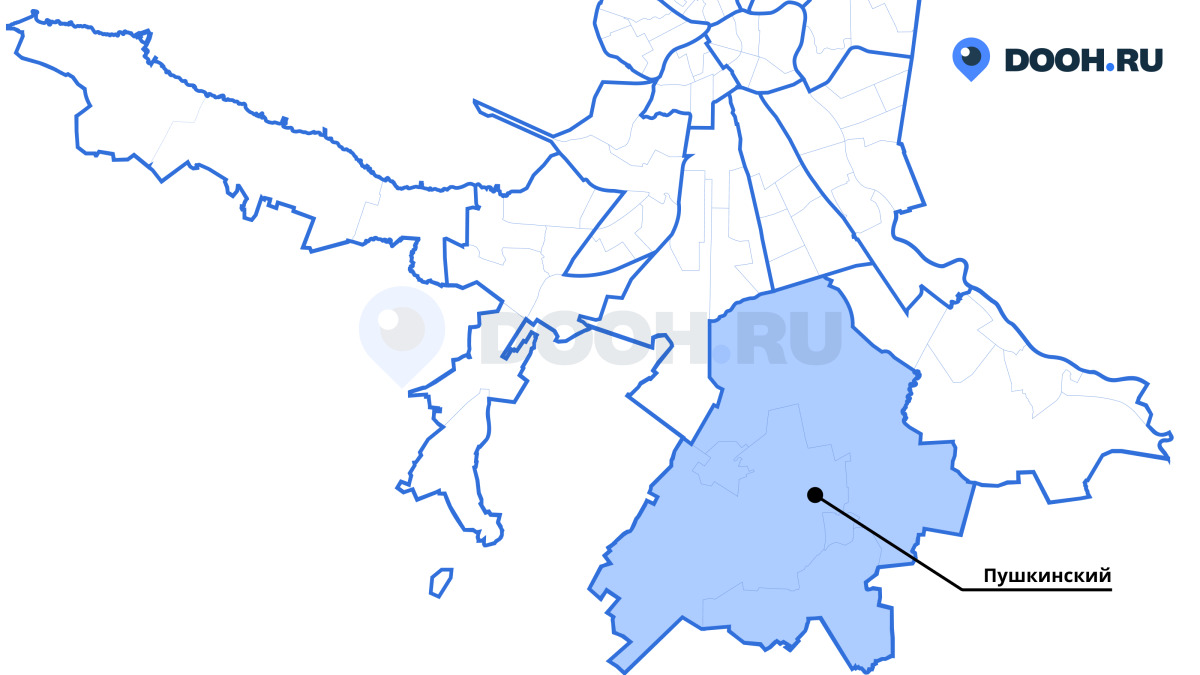
District Features:
Rich historical heritage (Tsarskoye Selo, Pavlovsk)
High tourist appeal
Combination of historical development and modern residential complexes
Transport accessibility via Pulkovskoye and Moskovskoye Shosse
Presence of large park zones and recreational territories
Restrictions on outdoor advertising placement in the historical part
Audience Characteristics:
Tourists (in Pushkin and Pavlovsk)
Residents with above-average income (in Pushkin)
Families with average income (in Shushary and new quarters of Pushkin)
Workers of the Shushary industrial zone
Key Locations for Advertising Placement:
City of Pushkin (historical center, railway station, main streets) - tourist flow and local residents.
City of Pavlovsk (park, railway station) - tourist flow.
Settlement of Shushary ("Shushary" metro station, industrial zone, new residential complexes) - low metro passenger flow, but growing population.
Moskovskoye Shosse, Vitebsky Prospekt - transit traffic.
Railway stations (Tsarskoye Selo, Pavlovsk, Shushary).
Recommended Formats:
Citylight formats and poster stands in Pushkin and Pavlovsk - targeting tourists and local residents.
3x6 billboards along Moskovskoye Shosse and Vitebsky Prospekt - coverage of transit traffic and Shushary residents.
Advertising at railway stations.
Stop branding in Pushkin and Shushary.
Advertising near "Shushary" metro station (despite low flow, it is the only metro hub).
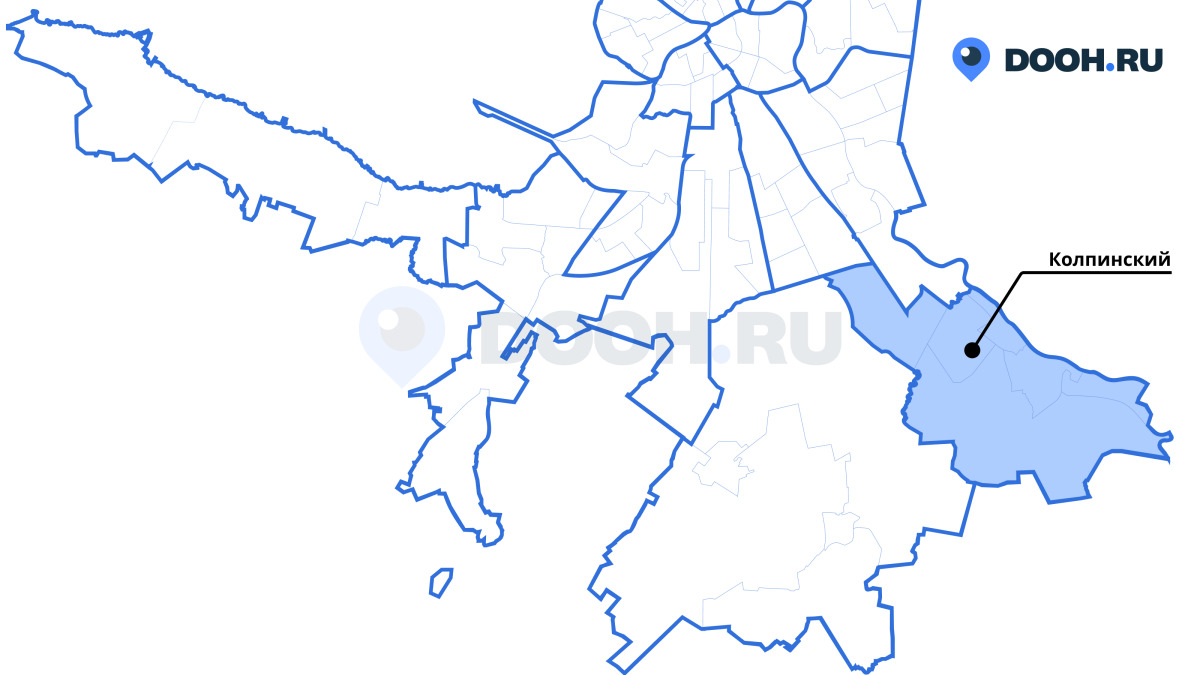
Kolpinsky District
Kolpinsky District is remote from the center of Saint Petersburg but independent and stable. The city of Kolpino and its surroundings live at their own pace: industry is strong here, trade works steadily, and proximity to home is important. Outdoor advertising here is oriented towards simple and understandable needs.
District Features:
Isolated location (city of Kolpino and adjacent territories)
Industrial character (Izhora Plants and other enterprises)
Predominantly residential development from the Soviet period
Transport accessibility via Moskovskoye Shosse and railway
Own infrastructure characteristic of a small city
Fewer restrictions on outdoor advertising placement
Audience Characteristics:
Industrial enterprise workers (Izhora Plants, etc.)
Families with average and below-average income
Local residents
Key Locations for Advertising Placement:
City of Kolpino (center, Prospekt Lenina, Boulevard Trudyashchikhsya, railway station)
Main entrances/exits from Kolpino
Territory of Izhora Plants
Kolpino Railway Station
Recommended Formats:
3x6 billboards at entrances/exits and on main streets of Kolpino.
Citylight formats in the center of Kolpino and near the railway station.
Branding of public transport stops.
Advertising on/in local public transport.
Advertising at the railway station.
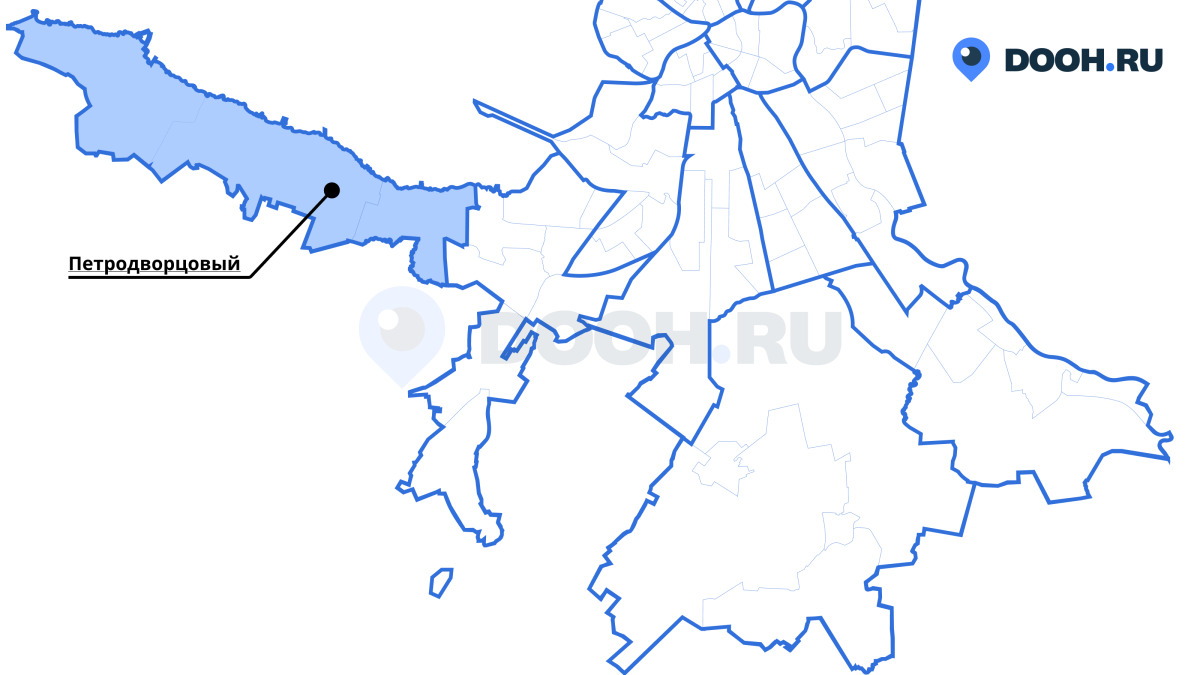
Petrodvortsovy District
Petergof, Strelna, and Lomonosov are about summer influx of tourists, palaces, parks, and sea breeze. It is important to consider seasonality and direct advertising to where there is maximum flow at the right time.
District Features:
World-famous palace and park ensembles (Petergof, Strelna, Lomonosov)
High tourist appeal
Seasonality of tourist flow (peak in summer)
Transport accessibility via Petergofskoye Shosse and railway
Presence of large park zones and recreational territories
Strict restrictions on outdoor advertising placement in the historical part
Audience Characteristics:
Tourists (main audience in Petergof during the season)
Local residents
Students (branches of SPbGU in Petergof)
Key Locations for Advertising Placement:
City of Petergof (parks, fountains, railway station, Sankt-Peterburgsky Prospekt) - enormous tourist flow during the season.
City of Lomonosov (center, port, railway station).
Settlement of Strelna (Konstantinovsky Palace).
Sankt-Peterburgskoye Shosse - the main transport artery.
Railway stations (Novy Petergof, Stary Petergof, Oranienbaum I).
Recommended Formats:
Advertising structures along Sankt-Peterburgskoye Shosse.
Citylight formats, poster stands, signs in Petergof (especially during the season).
Advertising at railway stations.
Stop branding.
Advertising on transport connecting the district with the city.
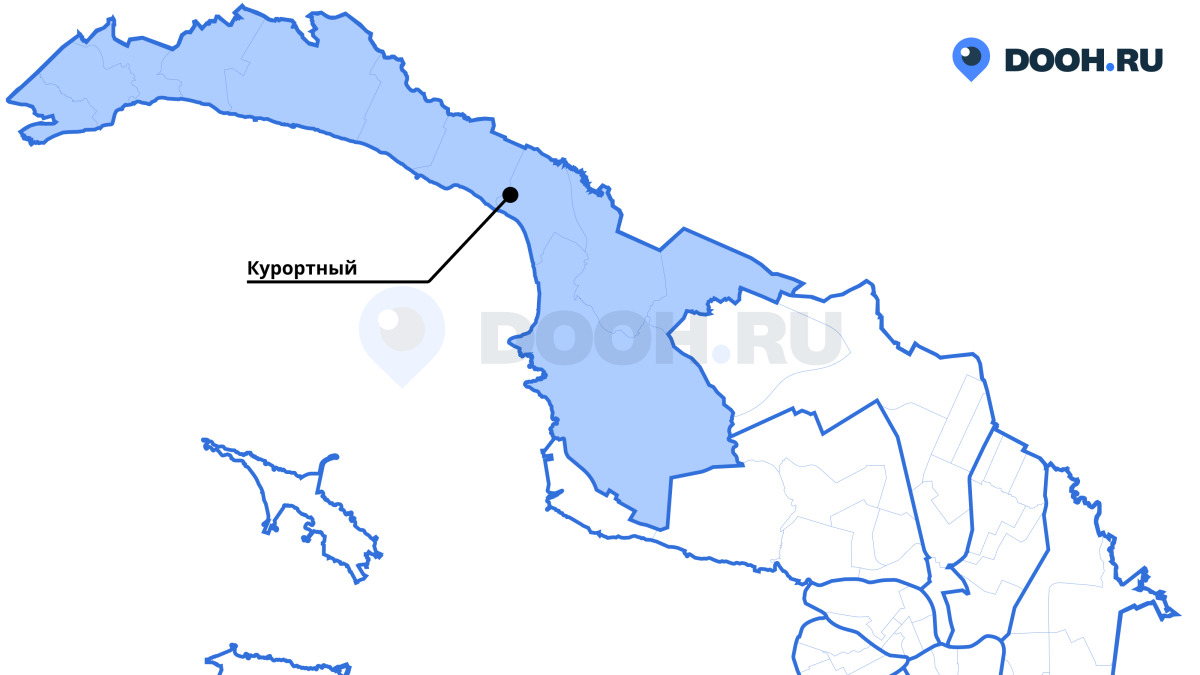
Kurortny District
From Sestroretsk to Komarovo - this district turns into a territory of rest and dacha comfort in the summer. An audience with high income lives here, and tourist flow increases manyfold.
District Features:
Recreational character (sanatoriums, boarding houses, beaches)
High seasonality (peak activity in summer)
Prestigious dacha settlements and cottage towns
Transport accessibility via Primorskoye Shosse and railway
Presence of large forest park zones
Restrictions on outdoor advertising placement in nature conservation zones
Audience Characteristics:
Dacha owners and vacationers (main audience in summer season)
Local residents
Residents with high income (owners of suburban real estate)
Key Locations for Advertising Placement:
City of Sestroretsk (center, railway station, Primorskoye Shosse).
City of Zelenogorsk (center, railway station, park).
Primorskoye Shosse, Zelenogorskoye Shosse - main thoroughfares with seasonal traffic.
Beaches and recreation zones (in summer season).
Railway stations (Sestroretsk, Beloostrov, Zelenogorsk).
Recommended Formats:
3x6 billboards along Primorskoye and Zelenogorskoye Shosse (especially effective during the season).
Citylight formats in the centers of Sestroretsk and Zelenogorsk.
Advertising on beaches and in recreation zones (seasonally).
Advertising at railway stations.
Stop branding.
Kronshtadtsky District
Kronshtadt is gradually becoming a new tourist magnet. Cultural clusters are appearing here, infrastructure is being updated, and interest is growing among both Petersburgers and city guests.

District Features:
Island location and isolation
Rich historical and naval heritage
Growing tourist appeal
Transport accessibility via Ring Road and Western High-Speed Diameter
Compact territory
Restrictions on outdoor advertising placement in the historical part
Audience Characteristics:
Tourists (especially after the opening of "Ostrov Fortov")
Military personnel and their families
Local residents
Key Locations for Advertising Placement:
Center of Kronshtadt (Yakornaya Ploshchad, Naval Cathedral).
Main streets of the city.
City entrance via the dam (Ring Road).
Passenger port (in summer season).
Recommended Formats:
Citylight formats and poster stands in the center of Kronshtadt.
Advertising boards at the city entrance.
Stop branding.
Advertising in tourist attraction places ("Ostrov Fortov").
Practical Recommendations for District Selection
When choosing a district for outdoor advertising placement, we recommend following this algorithm:
Determine the target audience of your product or service (demographic, social, behavioral characteristics).
Analyze in which districts of the city your target audience concentrates (places of residence, work, leisure, shopping).
Evaluate the campaign budget and correlate it with the placement cost in selected districts.
Consider seasonality (for example, in summer, advertising effectiveness in tourist and resort districts increases).
Analyze the competitive environment (where your competitors place ads and how loaded advertising structures are in selected districts).
Consider the possibility of combining various districts to achieve an optimal balance between coverage and targeting.
Consider legislative restrictions on outdoor advertising placement in selected districts.
Conduct field research of selected locations to assess real visibility and effectiveness of potential placement sites.
A Look into the Future: How District Effectiveness Will Change
Saint Petersburg is a dynamically developing city, and the effectiveness of various districts for outdoor advertising placement will change under the influence of the following factors:
Development of transport infrastructure - construction of new metro stations, interchanges, bridges will change transport flows and create new points of audience concentration.
Redevelopment of industrial zones - transformation of former industrial territories into residential and business quarters will change the character and composition of the audience in corresponding districts.
Construction of new residential complexes - emergence of large residential areas (for example, on reclaimed territories of Vasilyevsky Island) will create new centers of concentration of solvent audience.
Development of public spaces - creation of new parks, embankments, pedestrian zones will change the character of urban space use and create new opportunities for placing unconventional advertising formats.
Changes in legislation - possible tightening or liberalization of outdoor advertising placement rules may significantly affect the availability and cost of advertising surfaces in various districts.
In the coming years, particularly promising for outdoor advertising placement will be:
Primorsky District - thanks to active development of territories around Lakhta Center
Moskovsky District - in connection with development of territories around Pulkovo Airport and construction of new business centers
Vasileostrovsky District - thanks to development of reclaimed territories and new residential complexes
How We Can Help with Choosing Optimal Locations
Our agency specializes in outdoor advertising placement in Saint Petersburg and offers a comprehensive approach to choosing optimal locations:
Target audience analysis - we will help determine in which districts of the city your target audience concentrates.
Media planning - we will develop an optimal placement strategy considering your goals, budget, and specifics of the product or service.
Access to exclusive locations - thanks to direct cooperation with owners of advertising structures, we can offer placement in the most effective and in-demand places.
Personal discounts - our partnership relations with outdoor advertising operators allow us to provide clients with special placement conditions.
Individual media plans - we develop unique placement strategies considering the specifics of your business and features of the target audience.
Full campaign support - from development of creative concept to effectiveness monitoring and report preparation.
Leave your contact details - we will contact you shortly to discuss details and offer the best advertising placement options.
Key Takeaways for Advertisers
Choosing a district for outdoor advertising placement in Saint Petersburg is a strategic decision that should be based on a deep understanding of the city's features, target audience characteristics, and specifics of the advertised product or service.
To simplify the planning process, we have prepared a convenient interactive map of Saint Petersburg advertising surfaces. With its help, you can select structures by district, cost, and format, evaluate available options, and plan an optimal placement route.
Main conclusions to consider when planning an advertising campaign:
There are no universally effective districts - placement effectiveness always depends on specific campaign goals and objectives.
Central districts provide prestige and contact with a solvent audience, but have high placement costs and strict restrictions.
Residential districts offer broad coverage of a mass audience at more affordable placement costs.
Suburban districts are effective for specific categories (tourism, suburban real estate, goods for dacha and recreation).
Combining various districts often gives the best result, ensuring a balance between coverage and targeting.
Seasonality significantly affects placement effectiveness in some districts (especially tourist and resort ones).
City development constantly creates new opportunities for effective outdoor advertising placement.
Saint Petersburg offers advertisers unique opportunities for promoting goods and services through outdoor advertising. The right choice of placement district is a key success factor for an advertising campaign, allowing for maximum effective use of the advertising budget and achieving set marketing goals.
Choosing a district for outdoor advertising placement in Saint Petersburg is a strategic decision requiring deep analysis of the target audience, transport flows, development features, and competitive environment. As we have seen, each of the 18 city districts is unique.
Central districts (Central, Admiralteysky, Petrogradsky, Vasileostrovsky) offer prestige, enormous tourist and business flows, but are associated with high costs and strict restrictions. Here, image formats and targeted impact on a solvent audience are effective.
Large residential districts (Primorsky, Vyborgsky, Kalininsky, Nevsky, Moskovsky, Frunzensky, Kirovsky, Krasnogvardeysky) ensure mass coverage of city residents. Key points of attraction here are metro stations with high passenger flow (especially "Ladozhskaya", "Kupchino", "Prospekt Prosveshcheniya", "Pionerskaya", "Petrogradskaya", "Vasileostrovskaya", "Ulitsa Dybenko", "Prospekt Veteranov") and major transport thoroughfares. Here, billboards, citylight formats near metro stations and shopping and entertainment centers, and advertising on transport are effective.
Districts without a metro (Krasnoselsky, Pushkinsky, Kolpinsky, Petrodvortsovy, Kurortny, Kronshtadtsky) require a special approach with emphasis on ground transport, railway stations, main highways, and local centers of attraction. Here, advertising at stops and on transport, as well as billboards on key highways, are extremely important.
In the next article of our series, we will examine criteria for outdoor advertising effectiveness in Saint Petersburg and provide recommendations for evaluating and improving the effectiveness of advertising campaigns.